CASE STUDY
Launching Flex Spending Account Onboarding for Enterprise Client
The Problem
A Canadian health benefits administrator introduced Flexible Spending Accounts as a new benefit offering for clients and their employees.
At the time, the existing legacy platform could not support Flex product functionality. As a result, the Flex product had to be configured and managed through a separate side system, outside the core benefits experience.
This created a dual challenge:
-
-
Employees needed to understand an unfamiliar product without established mental models
-
The system still needed to accurately capture selections in a way that could be operationalized downstream
-
The onboarding experience had to educate users and collect correct information, while operating outside the core platform and without native product support.
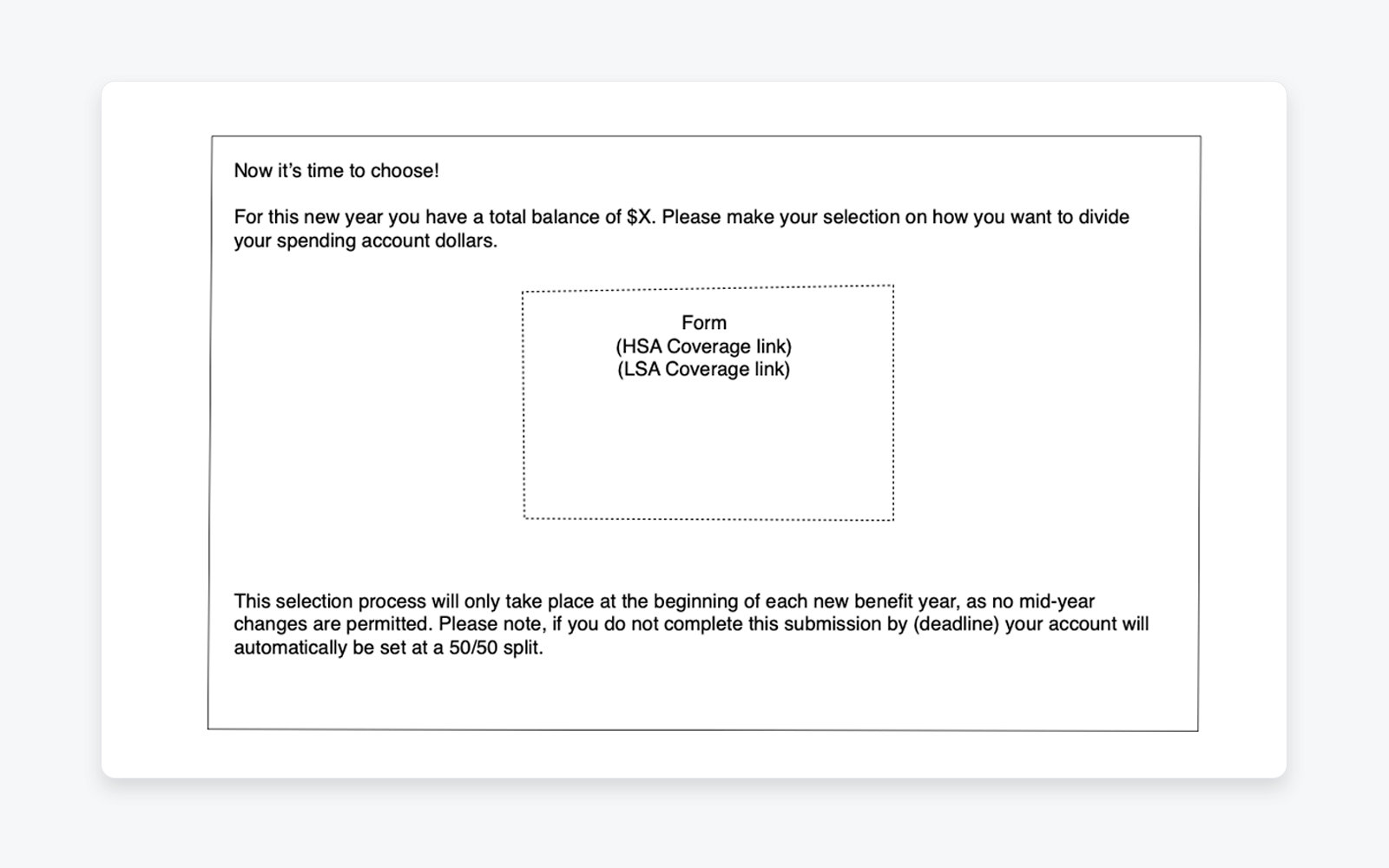
Visual: Early Flex allocation concept outside the legacy platform
Purpose: Aligns stakeholders on scope, constraints before engineering investment.
The Challenge
Unlike existing benefits, Flex accounts required employees to make active choices during setup, rather than being passively enrolled.
At the same time:
-
-
Setup errors could create downstream operational risk
-
The experience needed to stand alone outside the core platform while still feeling trustworthy and consistent
-
Support teams needed to avoid increased volume from basic setup questions
-
The goal was to design an onboarding flow that balanced clarity, accuracy, and scalability within a constrained technical environment.
The Solution
I designed and planned a guided onboarding experience, working closely with engineering to implement a solution that functioned independently of the legacy system while aligning with NHC’s broader product ecosystem.
Key elements included:
-
-
Step-by-step onboarding screens that introduced the Flex product in clear, accessible language
-
Contextual explanations at key decision points to support informed user selections
-
Guardrails to prevent incomplete or invalid submissions
-
System-generated emails that reinforced next steps and confirmed setup actions
-
Together, these elements helped users both understand the product and complete setup correctly without requiring hands-on support.
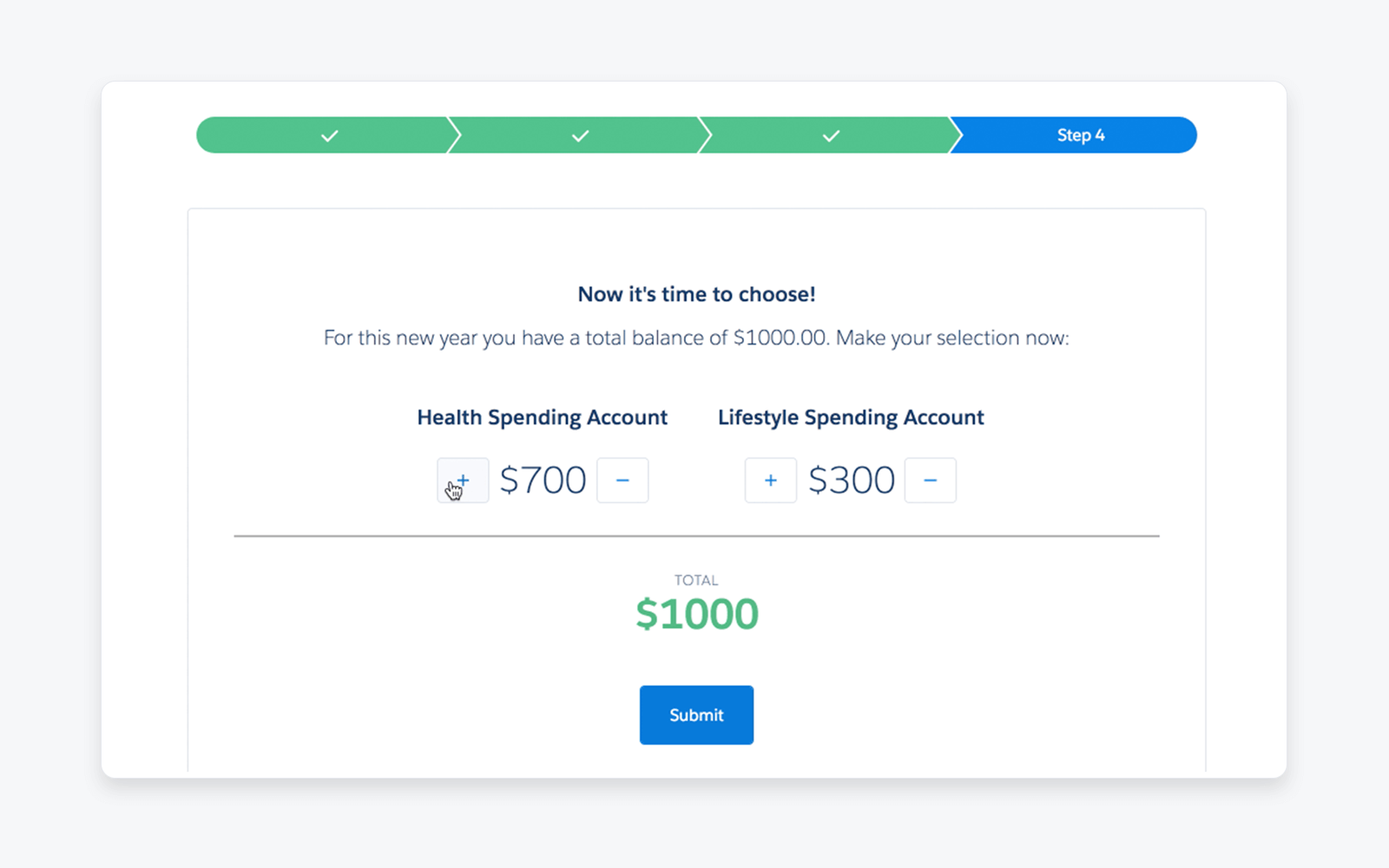
Visual: Final Flex allocation interface with real-time totals and validation
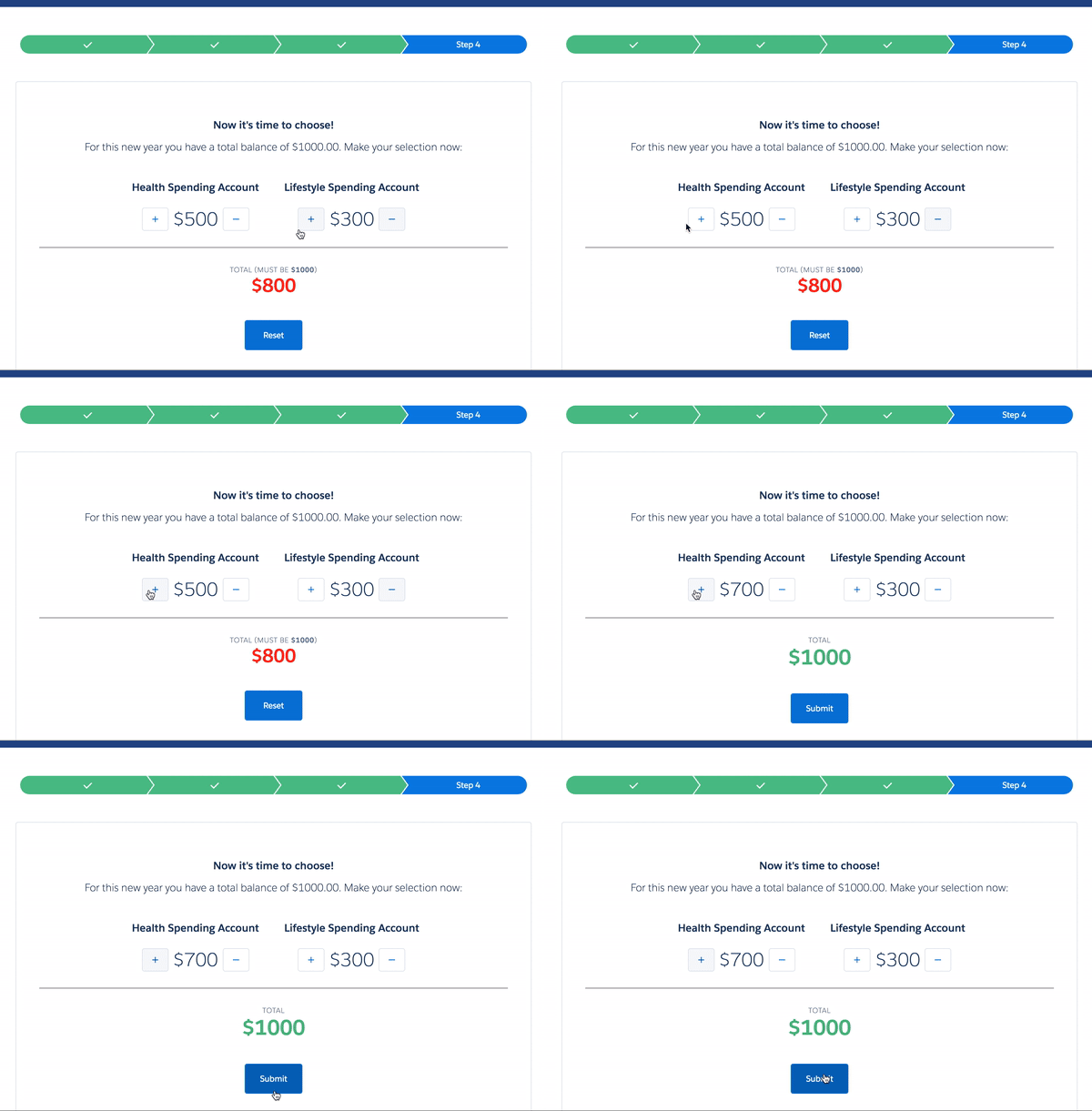
Visual: Interactive Flex allocation behavior with real-time validation
Purpose: Enables employees to distribute a fixed annual balance safely while enforcing business rules and preventing invalid submissions.
Why This Worked
-
Reduced confusion around a brand-new benefit offering
-
Captured accurate user selections despite platform limitations
-
Scaled onboarding for a new product without increasing operational burden
-
Created a foundation that could later be integrated into the core platform
What This Demonstrates
-
0→1 product launch in a constrained technical environment
-
Onboarding and activation design for enterprise products
-
Cross-system thinking when native platform support isn’t available
-
Strong collaboration between product and engineering
Confidentiality Note
Screens and data shown are anonymized and representative.
Company name, user information, and financial details have been modified to protect confidentiality.