CASE STUDY
Building and Scaling a Profitable Consumer Content Business in a Hyper-Competitive Market
Designing, launching, and growing a direct-to-consumer digital business in one of the most saturated categories on Amazon
This case study examines how I built and grew a profitable direct-to-consumer content business in the romance category — one of the most competitive segments in the Kindle Store — by applying product strategy, market analysis, and iterative delivery principles.
Operating independently, I owned the full product lifecycle: market discovery, positioning, product design, launch strategy, distribution, and ongoing optimization. To date, the business has generated $105K CAD in lifetime revenue (gross), with consistent category rankings and validated launch patterns that continue to inform new releases.
Market Context
Romance is the top-selling genre in the Kindle Store, with over 1.3M English-language titles competing for attention. Success in this market follows a power-law distribution: a small percentage of titles capture a disproportionate share of revenue, while the majority struggle to gain visibility.
Before committing to production, I conducted market analysis to understand:
-
-
-
Category saturation and competitive density
-
Sub-genre performance differences
-
The impact of series vs. standalone structures
-
Reader acquisition dynamics in subscription vs. direct purchase models
-
-
Key insight:
Sustainable success required treating content not as isolated releases, but as a system optimized for discovery, retention, and long-term monetization.
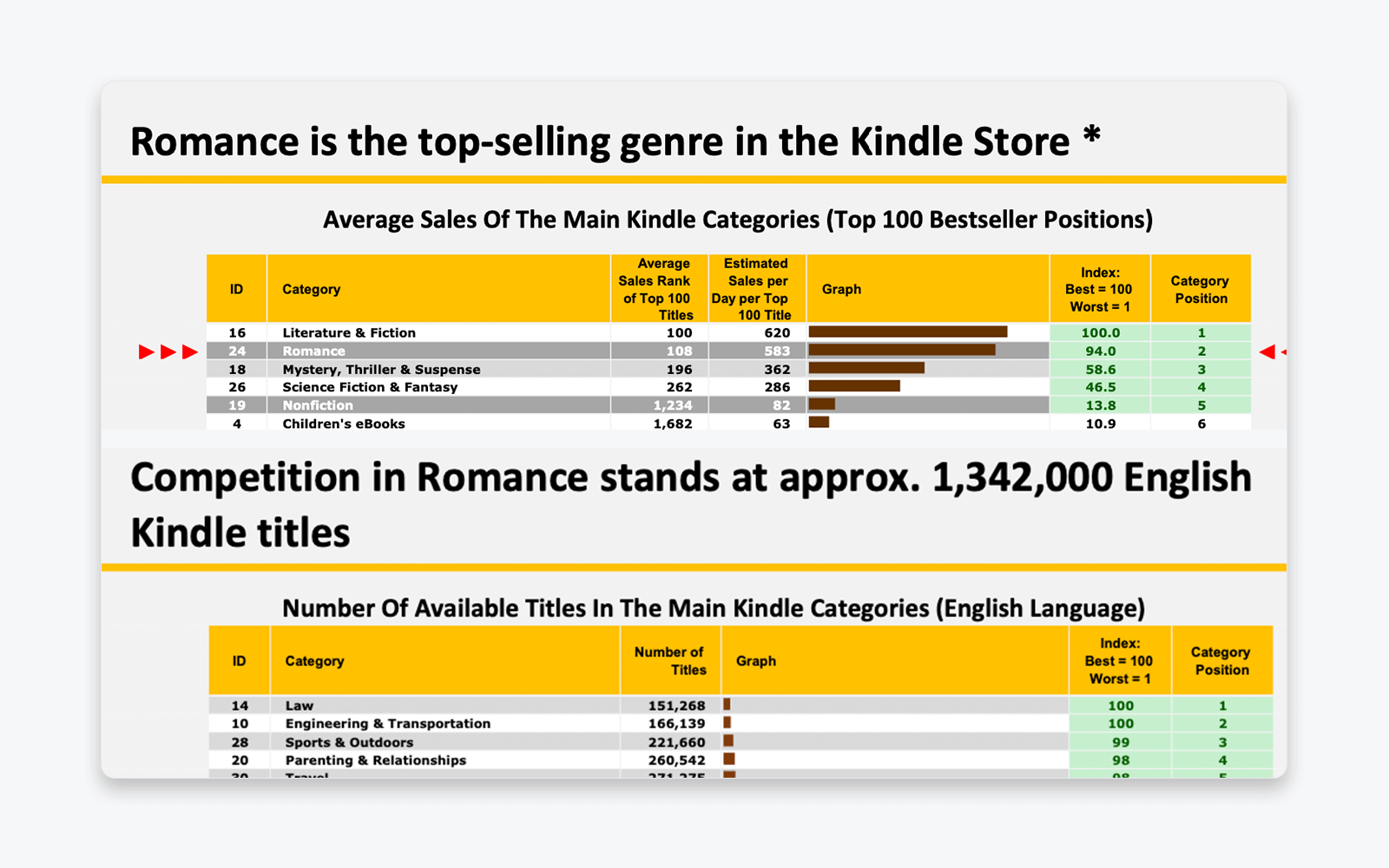
Visual: Market saturation & category competitiveness (K-lytics)
Purpose: Establishes the competitive constraints driving product decisions
Problem Statement
How might I build a sustainable consumer business in a category where:
-
-
Competition is extreme
-
Discoverability is algorithmically mediated
-
Reader expectations are highly structured
-
Revenue is concentrated among top performers
-
While minimizing risk and ensuring each release contributed to long-term portfolio growth rather than isolated wins?
Strategy & Product Approach
I approached the business as a product ecosystem rather than a collection of individual titles.
Key strategic decisions included:
1. Product Structure
-
Designed interconnected series to benefit from read-through economics
-
Optimized entry points to reduce reader acquisition friction
-
Structured releases to reinforce algorithmic momentum
2. Positioning & Differentiation
-
Identified under-served intersections within established sub-genres
-
Developed a consistent visual and tonal brand to signal reader fit
-
Aligned covers, descriptions, and metadata to category expectations
3. Distribution & Growth
-
Leveraged platform-native discovery mechanisms
-
Used limited paid acquisition selectively to validate positioning and support early traction
-
Prioritized learnings over short-term scale in early launches
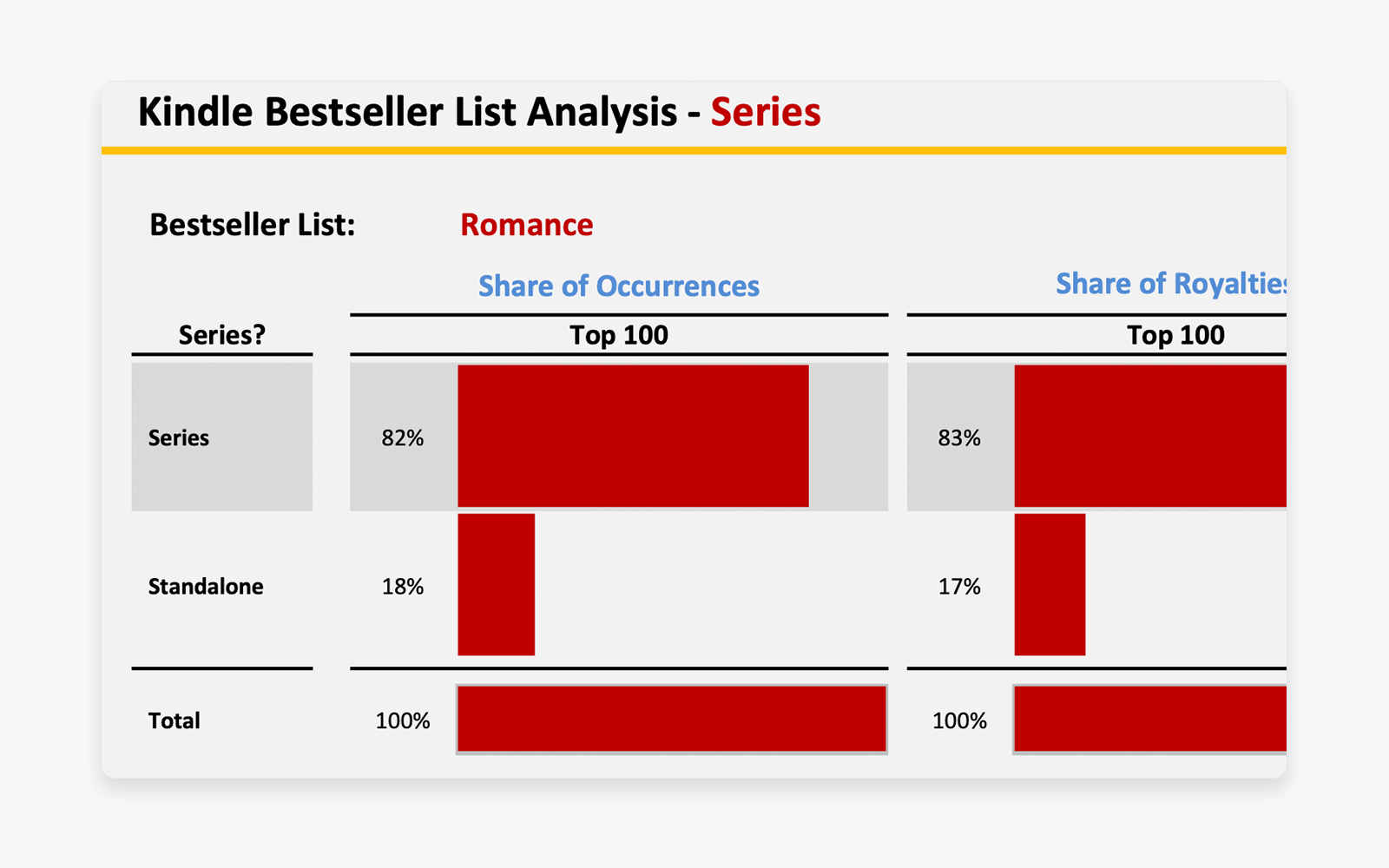
Visual: Series vs. standalone performance distribution (K-lytics)
Purpose: Justifies series-first product strategy
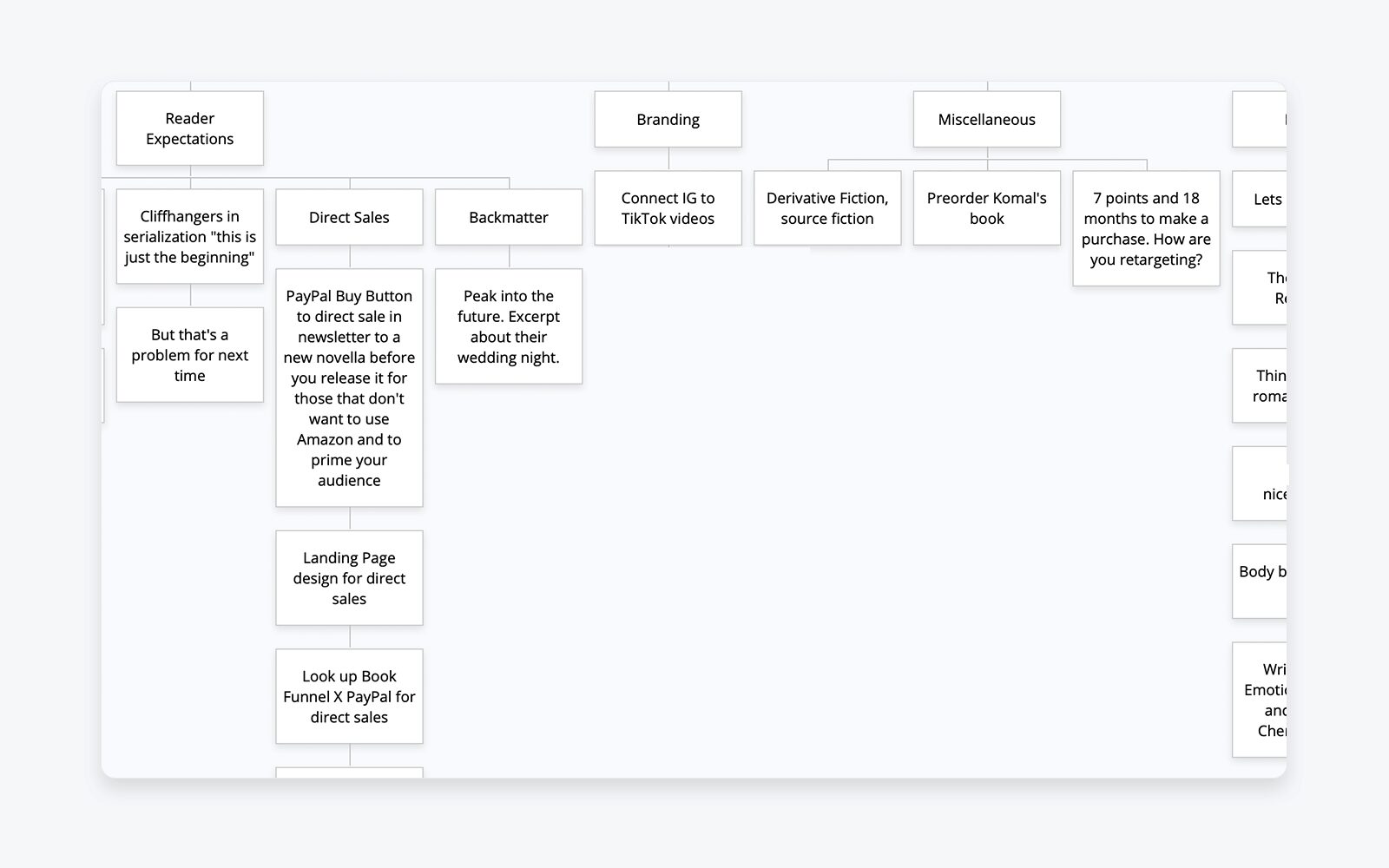
Visual: Strategy mapping board outlining reader expectations, branding decisions, direct sales experiments, and content distribution ideas for an independent publishing business.
Visual: Strategy mapping board outlining reader expectations, branding decisions, direct sales experiments, and content distribution ideas for an independent publishing business.
Execution
This case study highlights the launch of a breakout title that validated a repeatable delivery and optimization approach.
For this release, I applied a sprint-based execution model focused on learning velocity and risk control:
-
Defined clear hypotheses for positioning, packaging, and pricing before launch
-
Set scoped launch goals tied to discoverability and early reader signals
-
Monitored post-launch performance closely and adjusted metadata, pricing, and promotion based on real-time results
While the visuals focus on a single title, this launch served as a proving ground for a broader operating model that I continue to apply to subsequent releases.
This approach enabled:
-
-
Faster iteration during the launch window
-
Reduced downside risk by validating assumptions incrementally
-
A clear blueprint for repeating successful launch patterns
-

Visual: Amazon Kindle category page showing a book ranked #1 in New Releases for Multicultural & Interracial Romance.
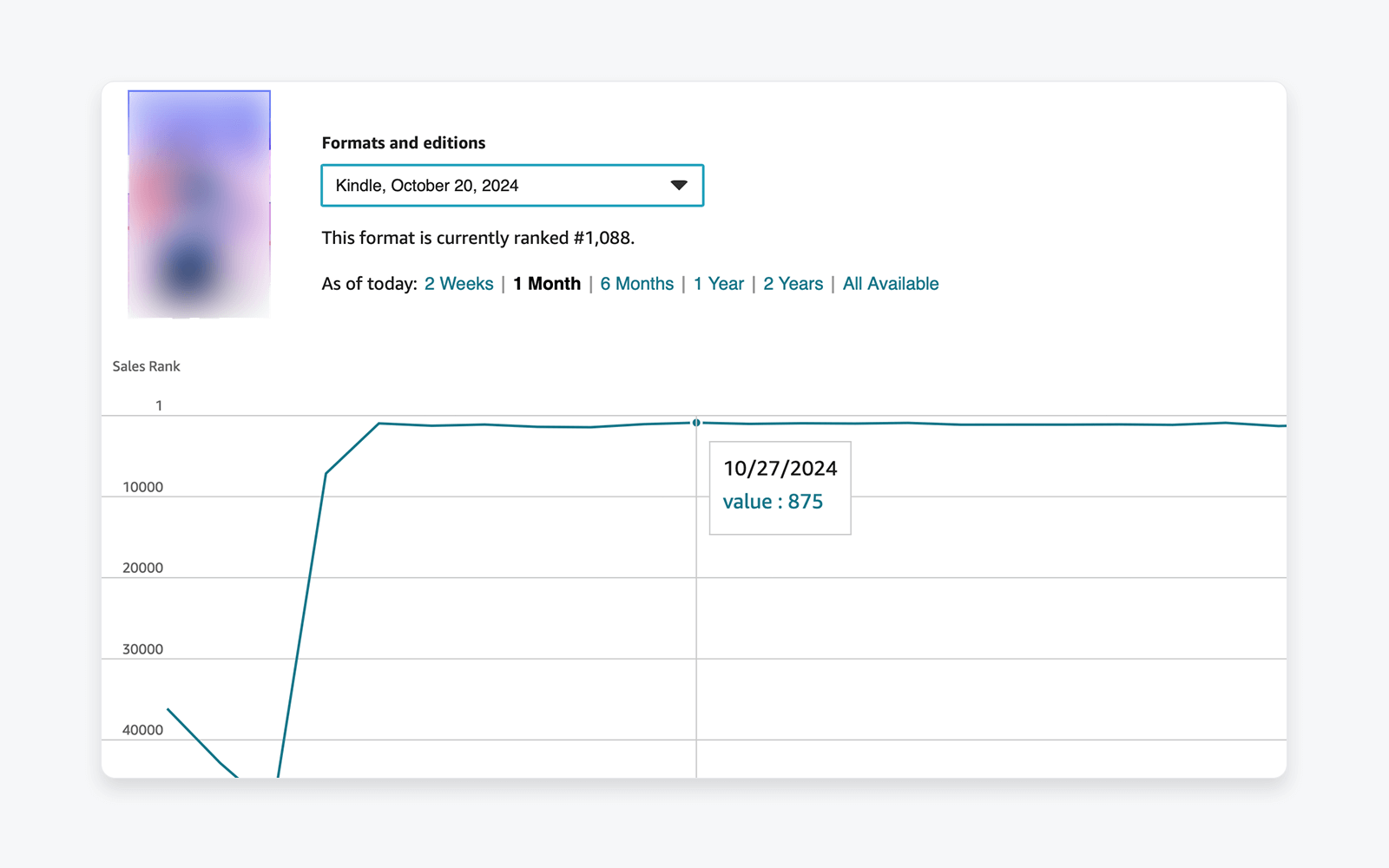
Visual: Line chart showing Kindle sales rank performance over time for a book release, with a rapid climb following launch and sustained ranking thereafter (blurred internal data).
Outcomes
Business Results
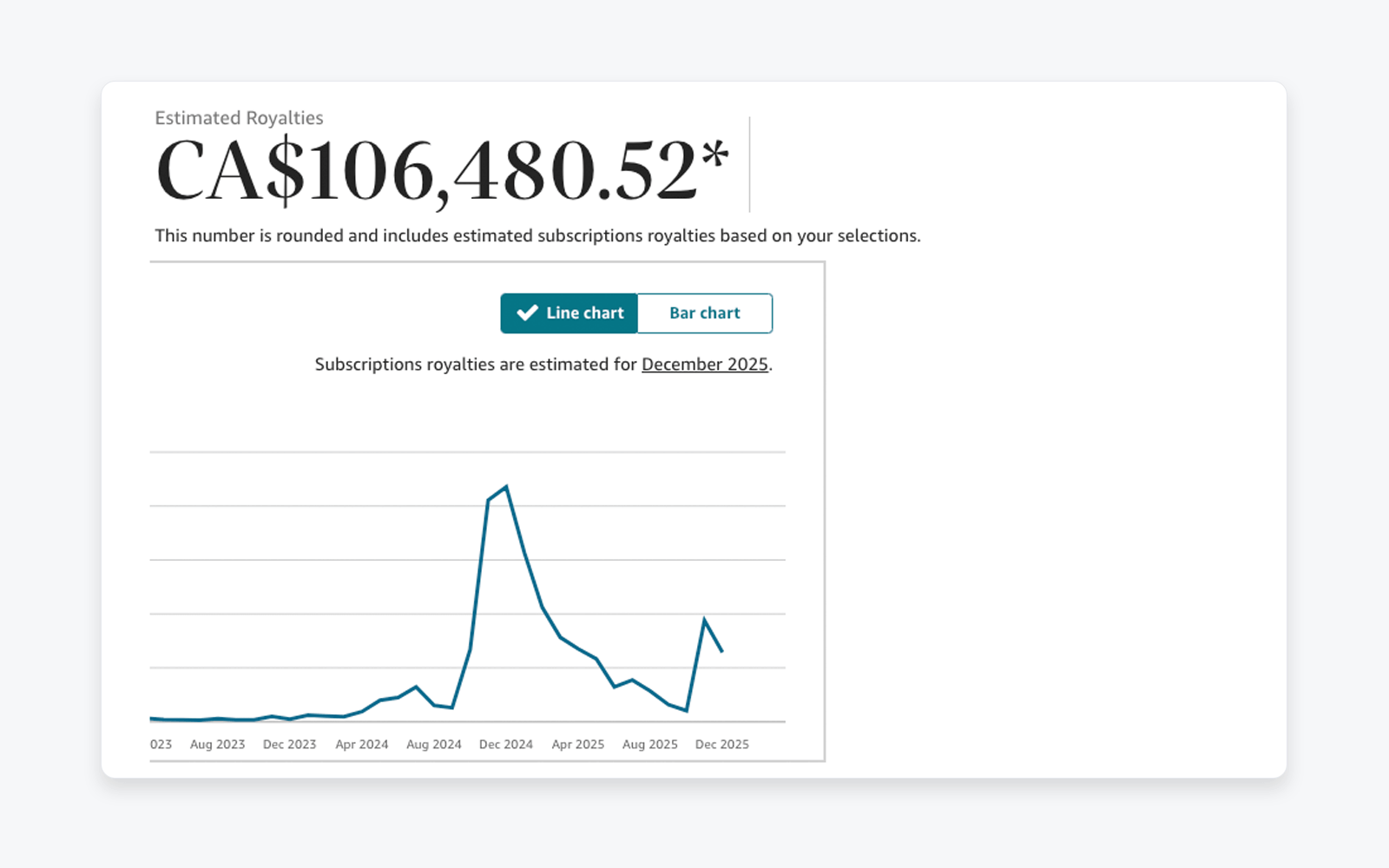
Visual: Revenue growth over time (Amazon royalty dashboard, anonymized)
+$105K CAD
In lifetime gross revenue (to date)
Top 100
Titles achieving Top New Release and Top 100 sub-category positions
Product Impact
-
Demonstrated predictable launch performance using a structured, repeatable approach
-
Reduced reliance on intuition by grounding launch decisions in market and performance data
-
Established a scalable foundation for future releases and experimentation
What This System Enabled
-
Faster time-to-market for new releases by reusing proven launch patterns
-
Increased confidence in forecasting early performance signals
-
The ability to test new concepts while protecting the core business
-
A shift from one-off launches to long-term portfolio thinking
Reflection
This work reinforced the importance of:
-
Grounding creative output in market realities
-
Designing systems rather than optimizing for one-off successes
-
Treating distribution and monetization as core product concerns, not afterthoughts
-
Using data to guide decisions while remaining attentive to user expectations
The experience closely mirrors product leadership in high-ambiguity environments: limited resources, incomplete information, and the need to balance short-term performance with long-term strategy.