CASE STUDY
Designing End-to-End System Logic for an Enterprise Benefits Platform
An enterprise benefits provider was building a new core platform to replace a legacy system that supported complex plan configurations, eligibility rules, and claim adjudication.
My role focused on ensuring that the new system behaved correctly end to end — preserving existing business logic while enabling new plan features, automation, and data structures that the legacy system could not support.
This work required defining system logic, validation rules, and guardrails that governed how benefit plans were configured, how eligibility and limits were enforced over time, and how financial decisions surfaced during adjudication in a high-risk, regulated environment.
The Problem
The goal of the new platform was not simply modernization — it was correctness.
The legacy system encoded years of benefit logic, much of it implicit or operationally enforced. The new system introduced:
-
-
New database fields
-
New plan-level capabilities
-
Increased automation
-
Reduced reliance on manual interpretation
-
At the same time, it needed to:
-
-
Faithfully carry forward existing benefit behavior
-
Handle new edge cases introduced by expanded functionality
-
Ensure financial accuracy across benefit years, run-off periods, and carry-forward rules
-
Any mistake could result in:
-
-
Incorrect benefit payouts
-
Financial exposure for employers and members
-
Loss of trust in the platform
-
The challenge was to define and validate system logic that worked consistently from plan setup through adjudication, even in complex, time-dependent scenarios.
My Role
I owned product definition for core system logic and validation, including:
-
-
Translating benefit policy and operational rules into system behavior
-
Defining plan-level guardrails and dependencies
-
Designing validation rules, error states, and contextual system messaging
-
Ensuring plan logic surfaced correctly during adjudication
-
Partnering closely with engineering on implementation and edge-case handling
-
Supporting deep logic testing and QA for high-risk scenarios
-
This work required constant collaboration with engineering, operations, adjudication teams, and stakeholders responsible for benefit design and compliance.
Designing Plan-Level Guardrails & Capabilities
Benefit plans could vary significantly in structure and rules. As new features were introduced at the plan level, the system needed to prevent invalid configurations while still allowing flexibility.
Examples of plan-level logic included:
-
-
Benefit year definitions
-
Credit allocation timing
-
Carry-forward rules and limitations
-
Eligibility windows and transitions
-
Rather than relying on downstream checks, we designed guardrails at the point of configuration, ensuring that only valid combinations could be created.
Why this mattered
-
-
Prevented invalid plans from ever entering the system
-
Reduced downstream adjudication errors
-
Shifted complexity earlier, where it was easier to control
-
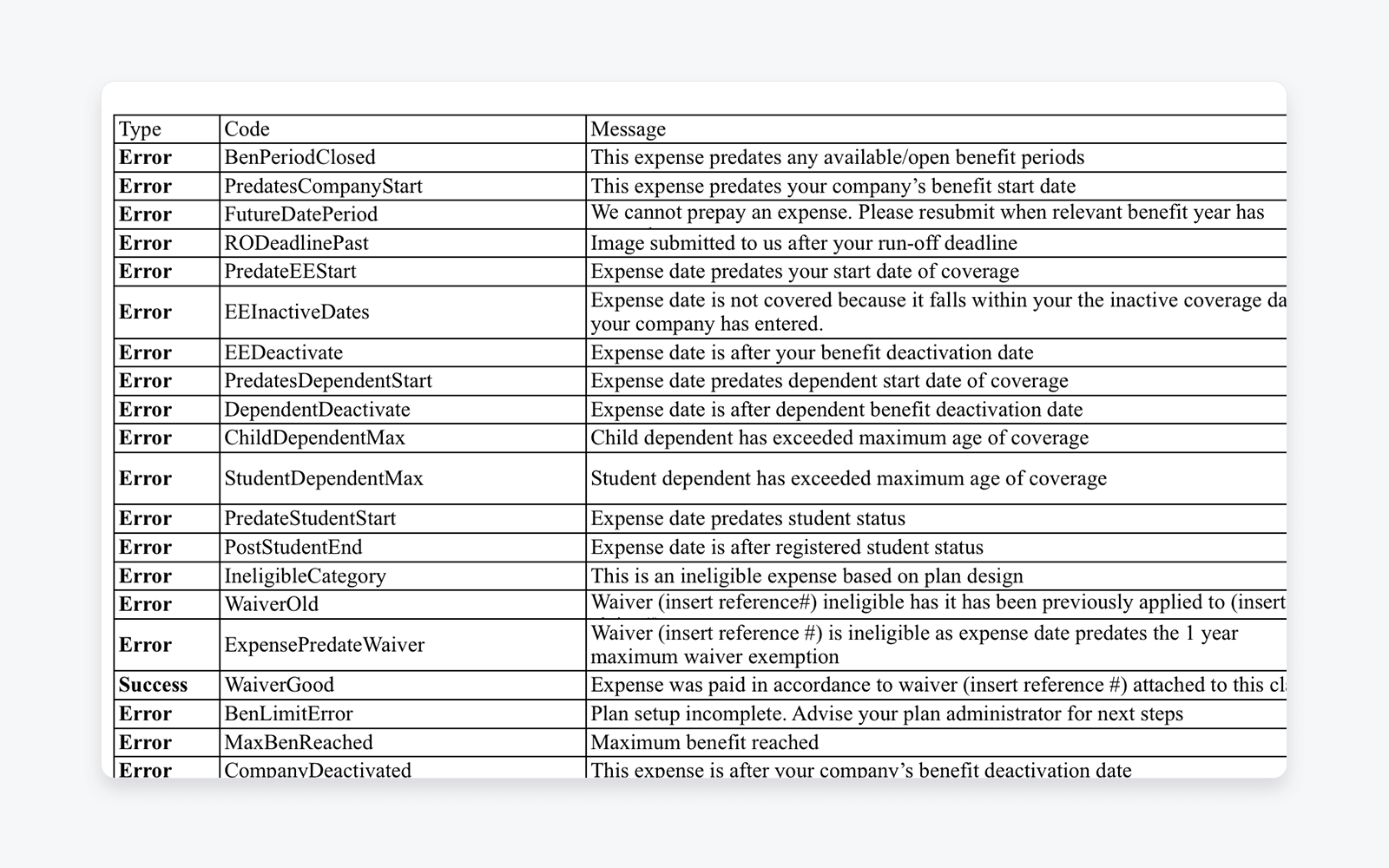
Visual: System-level error codes and adjudication messages
Purpose: Demonstrates how complex benefit rules were translated into deterministic system responses and user-facing explanations.
Translating Plan Logic Into System Behavior
Once plans were configured, the system needed to apply those rules automatically over time.
This included handling scenarios such as:
-
-
Benefit year transitions
-
Run-off periods
-
Carry-forward credits with time limits
-
Simultaneous availability of current-year credits, carried-forward credits, and newly allocated credits
-
I worked with engineering to define:
-
-
How the system determined which “bucket” of funds to draw from
-
When and how system messaging appeared
-
How conflicting or overlapping states were resolved
-
The goal was not just correct calculation, but clear, explainable behavior.
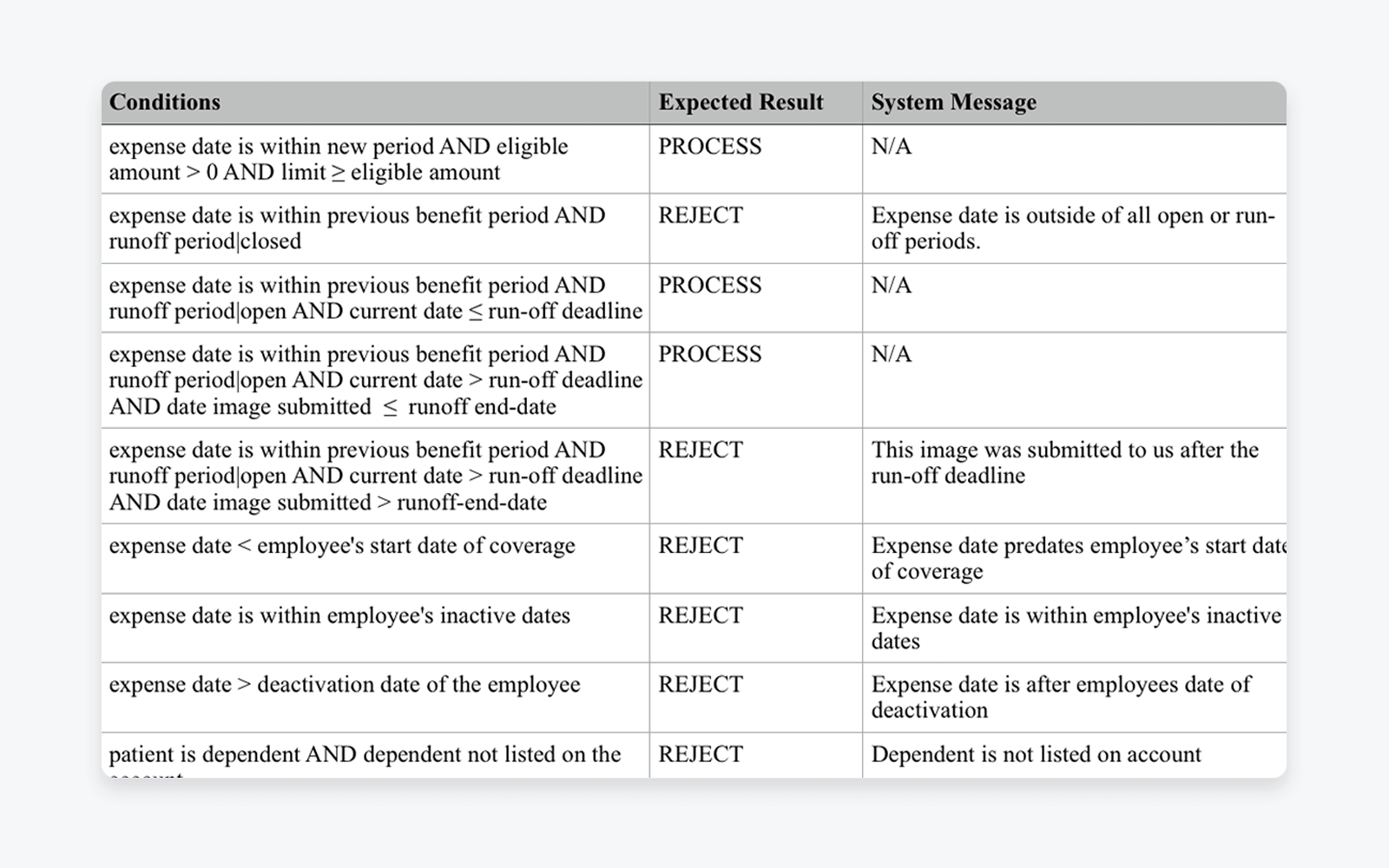
Visual: Eligibility and timing rules matrix
Purpose: Shows how benefit rules were evaluated across dates, periods, and system states to produce consistent outcomes.
Ensuring Correct Behavior During Adjudication
Adjudication was the point at which financial decisions were finalized, making it the most critical surface for validating system logic.
I focused on ensuring that:
-
-
Plan-level rules correctly surfaced during claim review
-
Adjudicators could see relevant system signals at the right time
-
Automated indicators guided decision-making without removing human oversight
-
Examples included:
-
-
Visual indicators when benefit limits were reached
-
System messaging explaining why an expense was allowed, limited, or blocked
-
Clear visibility into claim state and context
-
Adjudication workflows became a proof point that the underlying system logic was working as intended.
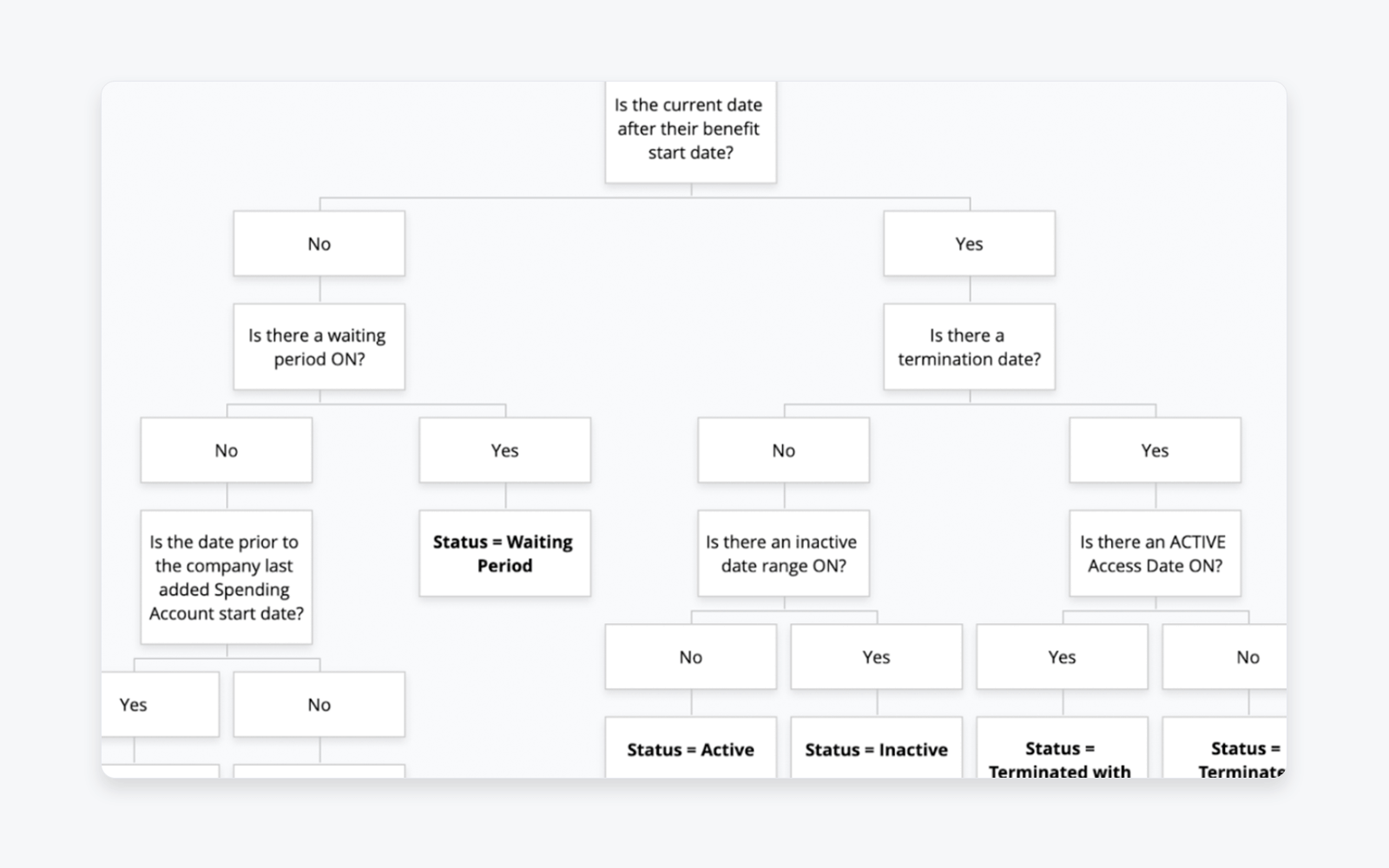
Visual: Benefit eligibility decision flow
Purpose: Illustrates how the system evaluates employee status, timing, and coverage conditions to determine eligibility
Testing, Validation & Risk Mitigation
Because benefit dollars were at stake, this work required deep, scenario-based testing.
I partnered with engineering and operations to:
-
Identify high-risk edge cases
-
Validate behavior across benefit years and run-off periods
-
Ensure new automation matched expected outcomes
-
Catch discrepancies between legacy behavior and new system logic
This testing phase was essential to ensuring the platform could scale without increasing operational or financial risk.
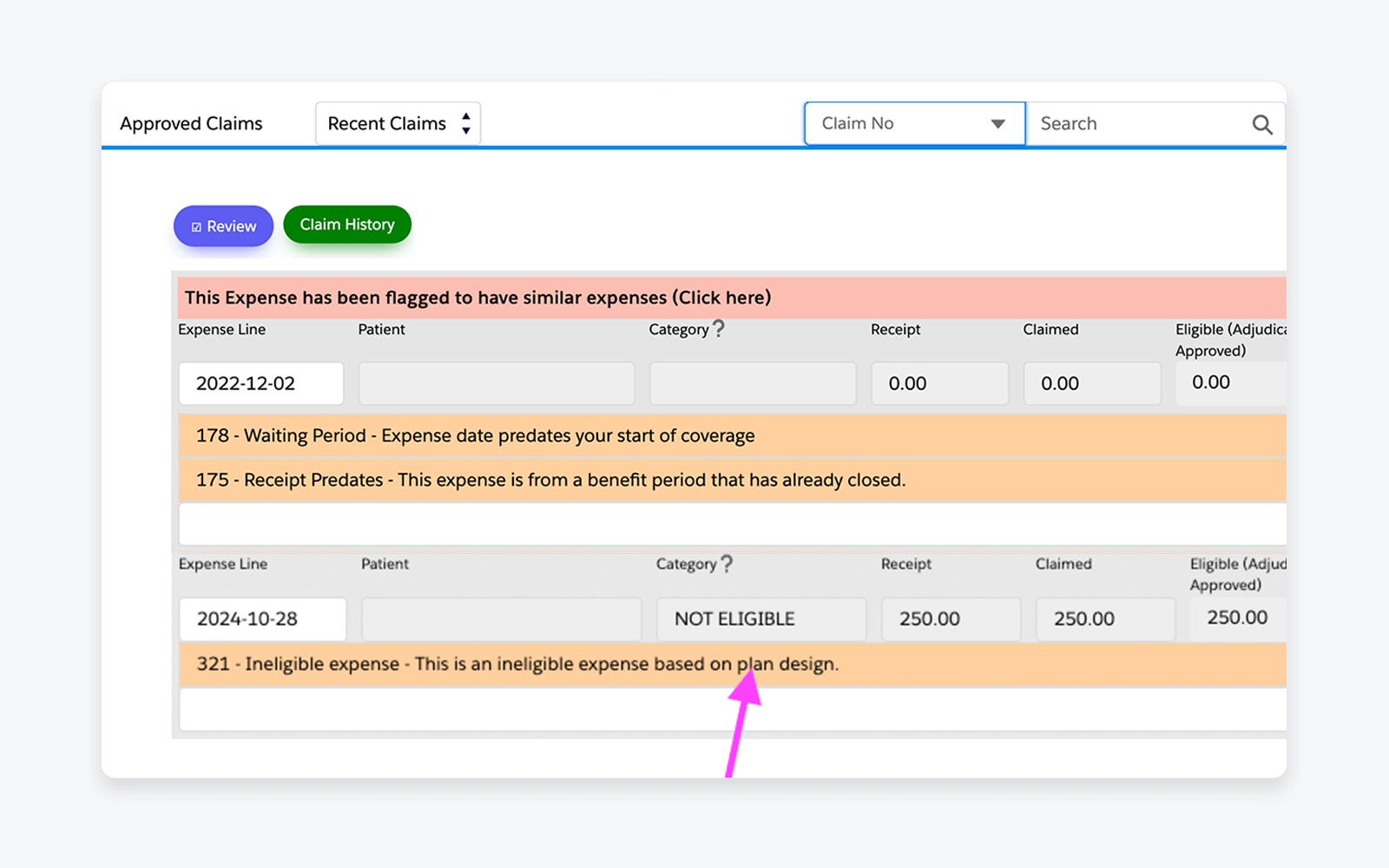
Visual: Adjudication interface with system-generated validation messages
Purpose: Demonstrates how underlying system logic surfaced clearly during claim review to guide adjudicator decisions
Outcomes & Impact
While specific metrics are confidential, this work resulted in:
-
More consistent and explainable benefit behavior
-
Reduced reliance on manual interpretation
-
Increased confidence in automated adjudication
-
A platform foundation capable of supporting more complex plan designs
Most importantly, it enabled the organization to modernize its platform without compromising financial correctness.
What This Demonstrates
This case highlights my ability to:
-
-
Own end-to-end system logic in regulated environments
-
Translate policy and business rules into product behavior
-
Design for correctness, clarity, and trust
-
Partner deeply with engineering on logic-heavy systems
-
Anticipate risk and validate complex edge cases
-
Confidentiality Note
Screens shown are anonymized and simplified to protect sensitive business logic and customer data. Descriptions focus on decision-making and tradeoffs rather than proprietary implementation details.